
If you're fielding complaints about stuffy air, mysterious odors, or employees feeling unwell at the office, you're not alone. Indoor air quality (IAQ) issues are one of the most common: and often overlooked: problems in commercial buildings. The tricky part? Poor air quality isn't always obvious until people start noticing symptoms like headaches, fatigue, or respiratory irritation.
At Mechanical Hygiene Services, we specialize in helping businesses get to the bottom of air quality concerns and create healthier work environments. Whether you manage a small office or oversee a large commercial facility, here are 10 essential things you need to know about office air quality complaints.
1. Indoor Air Quality Problems Require a Three-Pronged Approach
There's no single magic fix for air quality issues. Effective IAQ management involves three key strategies working together:
- Source control: Removing or isolating pollutant sources before they spread
- Ventilation: Diluting and removing pollutants through proper airflow
- Filtration: Using quality filters to clean the air continuously
When all three elements are addressed, you'll see real, lasting improvements. Skip one, and you're essentially putting a band-aid on a bigger problem.
2. Acting Quickly Prevents Small Issues From Becoming Big Problems
The moment someone suspects an air quality issue, it's time to investigate. Delaying action allows pollutants to accumulate, mold to spread, and employee health concerns to escalate.
Notify your building manager or facility team immediately when complaints arise. Early intervention helps identify the root cause faster and prevents costly repairs down the road. Trust us: what seems like a minor complaint today can turn into a major headache tomorrow.
3. Your HVAC System Needs Regular Professional Maintenance
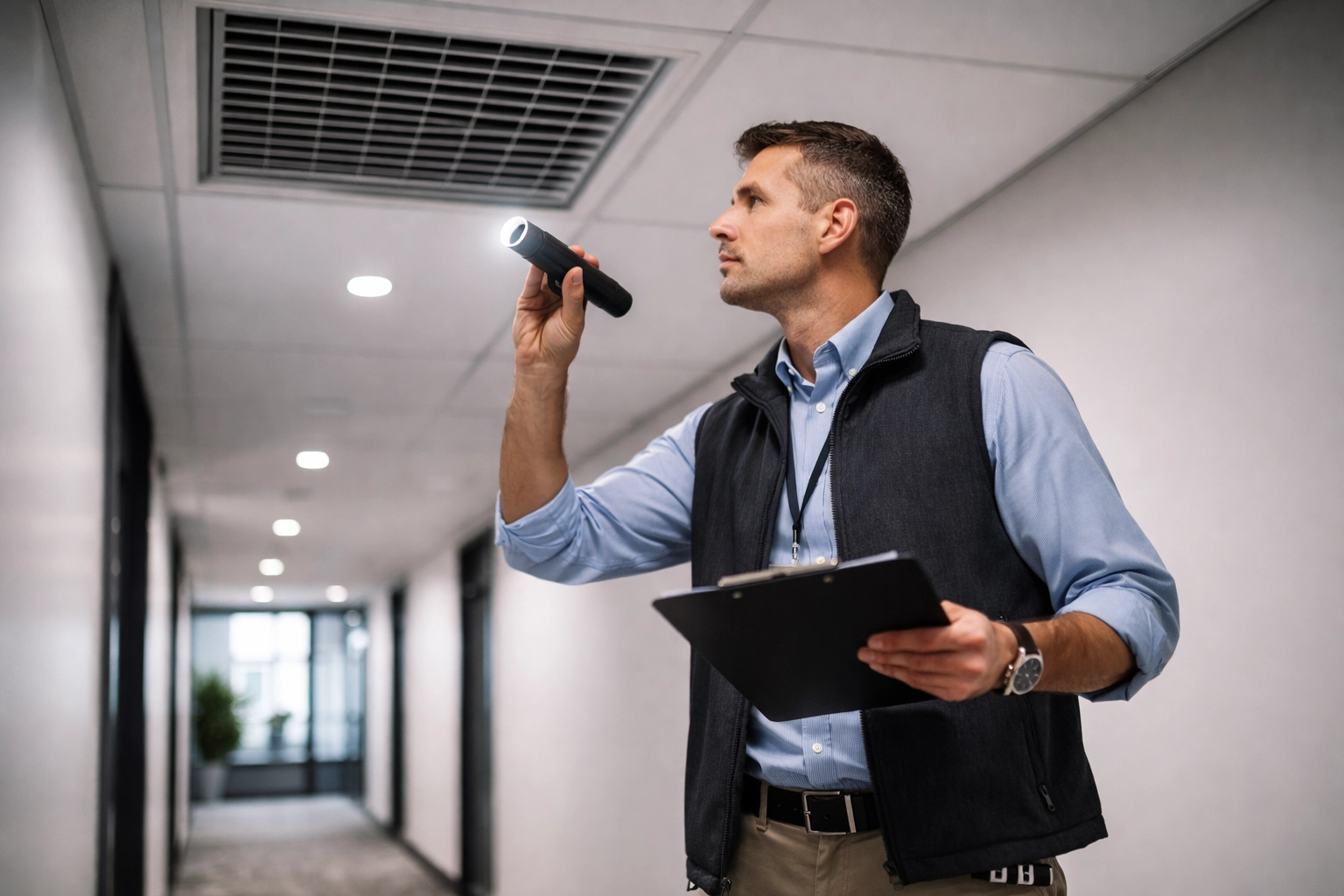
Here's a truth that surprises many facility managers: your HVAC system can actually be the source of air quality problems if it's not properly maintained. Systems that don't receive professional attention at least twice a year can harbor:
- Excessive dust buildup
- Mold growth
- Bacteria colonies
- Debris that restricts airflow
Regular inspections, filter changes, and professional duct cleaning are non-negotiables for maintaining healthy indoor air. We recommend scheduling maintenance in spring and fall to keep your system running efficiently year-round.
4. Not All Air Filters Are Created Equal
If you're using the cheapest filters you can find, you might be doing more harm than good. Air filters are rated using the Minimum Efficiency Reporting Value (MERV) system, and the higher the rating, the better the filtration.
For office environments, we recommend MERV 13 filters as the sweet spot between effective filtration and proper airflow. Lower-rated filters allow allergens, dust, and other pollutants to slip right through and circulate throughout your space.
Investing in quality filters is one of the simplest upgrades you can make to improve your office air quality immediately.
5. Humidity Levels Play a Bigger Role Than You Think
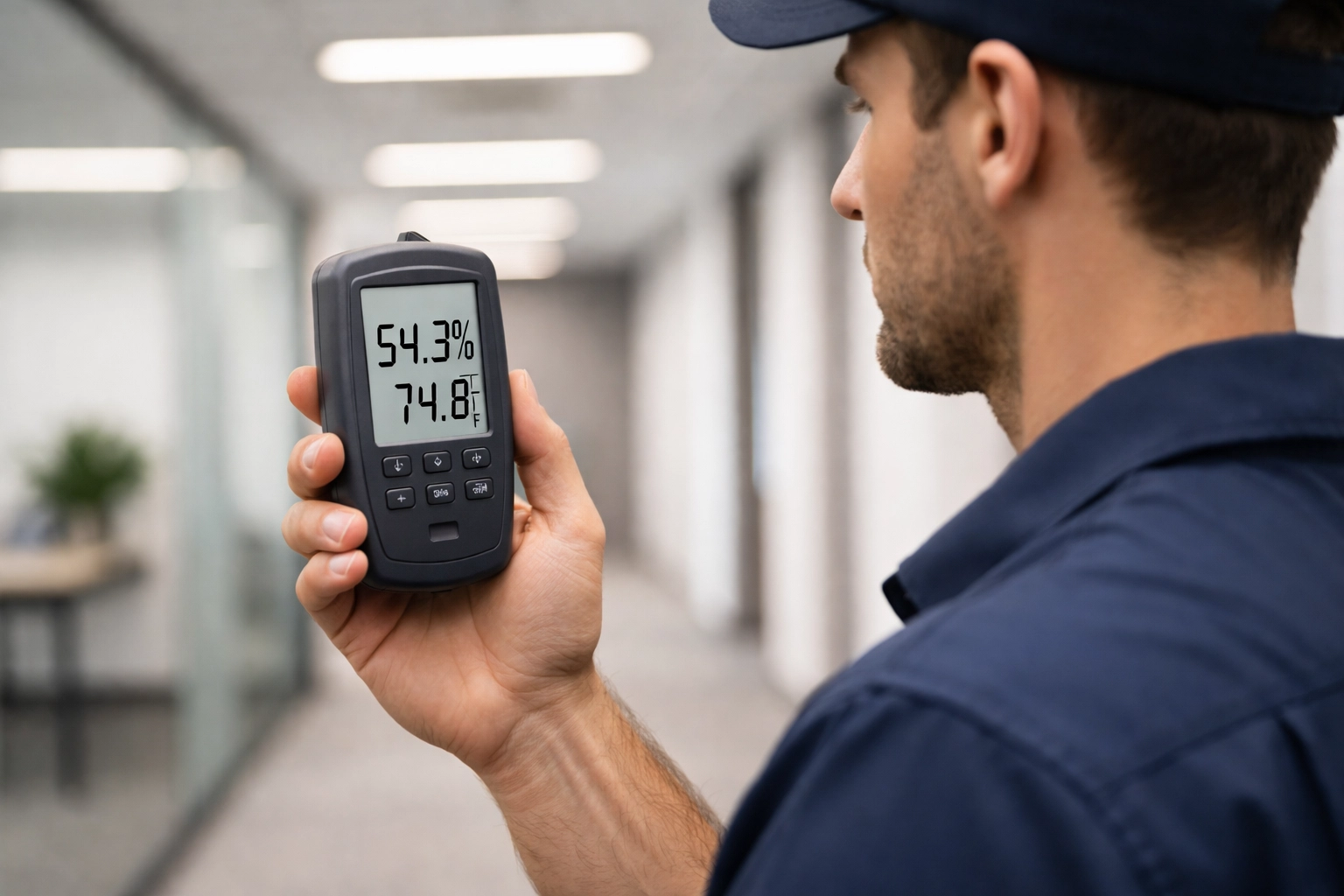
Humidity isn't just about comfort: it directly impacts air quality and employee health. The ideal range for office environments is 30-50% relative humidity.
Too high? You're creating a breeding ground for mold, mildew, and dust mites.
Too low? Expect complaints about dry skin, irritated eyes, and increased respiratory discomfort.
Monitoring humidity levels and using humidifiers or dehumidifiers as needed can make a noticeable difference in how your team feels throughout the workday.
6. Blocked Vents Are a Surprisingly Common Culprit
It sounds simple, but you'd be amazed how often we trace air quality complaints back to blocked vents. Filing cabinets pushed against wall returns, boxes stacked in front of supply vents, or furniture rearrangements that obstruct airflow can all compromise your ventilation system's effectiveness.
Take a walk through your office and check that all vents and grilles are clear. Proper air circulation is essential for diluting pollutants and maintaining consistent temperatures throughout the space.
7. Your Building's Surroundings Matter
Indoor air quality isn't just about what's happening inside your walls. External factors can significantly impact the air your employees breathe:
- Loading docks that allow exhaust fumes to enter the building
- Nearby construction generating dust and debris
- Outdoor smoking areas positioned too close to air intakes
- Traffic patterns near fresh air intake locations
Implementing strict no-smoking policies near building entrances and monitoring external pollution sources can prevent outdoor contaminants from becoming indoor problems.
8. Common Pollutant Sources Are Hiding in Plain Sight
When investigating air quality complaints, we often find the culprits are everyday items and activities that fly under the radar:
- Renovation and remodeling materials off-gassing chemicals
- Cleaning products with harsh chemical formulations
- Pest control treatments leaving residual compounds
- New furniture and carpeting releasing volatile organic compounds (VOCs)
- Office equipment like printers emitting fine particles
Switching to low-VOC materials and eco-friendly cleaning products can significantly reduce harmful emissions in your workspace. It's a straightforward change that yields real results.

9. Professional Air Quality Testing Provides Real Answers
When complaints persist and the cause isn't obvious, professional indoor air quality testing is your best investment. Comprehensive assessments can detect:
- Mold spores and fungal contamination
- Bacterial presence
- Chemical contaminants and VOCs
- Particulate matter levels
- Carbon dioxide concentrations
At Mechanical Hygiene Services, we provide detailed IAQ testing that goes beyond surface-level observations. Our assessments give you actionable data to address problems at their source: no guesswork involved.
10. Documentation and Follow-Up Are Essential
Addressing air quality complaints isn't a one-and-done situation. Keeping detailed records of complaints, maintenance activities, and remediation efforts helps you:
- Identify patterns and recurring issues
- Demonstrate due diligence for regulatory compliance
- Track improvements over time
- Make informed decisions about future investments
We recommend establishing a formal process for logging complaints and scheduling regular follow-up assessments to ensure your improvements are holding.
Creating a Healthier Workplace Starts Here
Office air quality complaints are more than just inconveniences: they're signals that something in your building environment needs attention. The good news? Most issues are fixable with the right approach and professional guidance.
Whether you're dealing with persistent odors, unexplained employee health concerns, or simply want to be proactive about your indoor environment, we're here to help. Our team specializes in HVAC cleaning, indoor air quality testing, and comprehensive solutions tailored to commercial facilities of all sizes.
Ready to breathe easier? Contact Mechanical Hygiene Services today to schedule an assessment and take the first step toward cleaner, healthier office air. Your employees: and your bottom line( will thank you.)