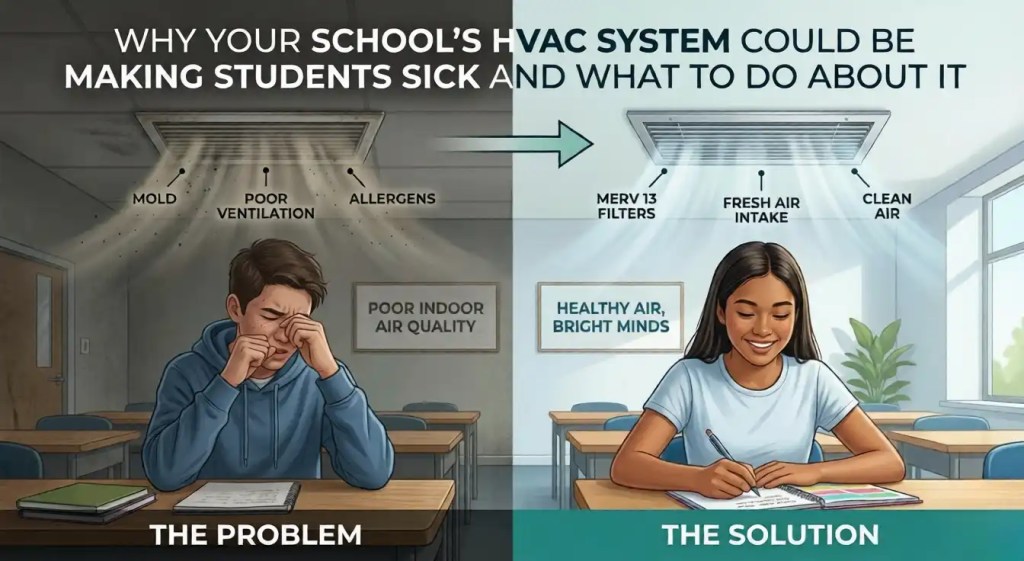
If you manage a school building, you already know that the moment students come back in September, every system in the building is running at full capacity again. What most facility managers do not think about is what has been building up inside the HVAC system over the summer and what happens when that gets pushed into occupied classrooms all day, every day.
The combination of a system that ran hard through spring, sat through a hot and humid summer, and now has to carry a full building load again is exactly where most school air quality problems start.
Here is what you need to know before it becomes a problem you are reacting to instead of preventing.
What Happens Inside a School HVAC System Over Time
A school HVAC system that has not been professionally cleaned is not in the same condition as it appears on the outside. The interior of the ductwork tells a different story.
Dust and debris accumulate on duct walls every single day. In a school building, where hundreds of students and staff are moving through the building constantly, that accumulation happens faster than it does in a standard office environment.
On top of that, moisture collects inside air handlers and drain pans. In a building that sees summer humidity and then gets closed up, that moisture creates exactly the kind of environment where mold and biological growth take hold.
That’s where Mechanical Hygiene comes into the picture.


Why This Shows Up as a Health Problem
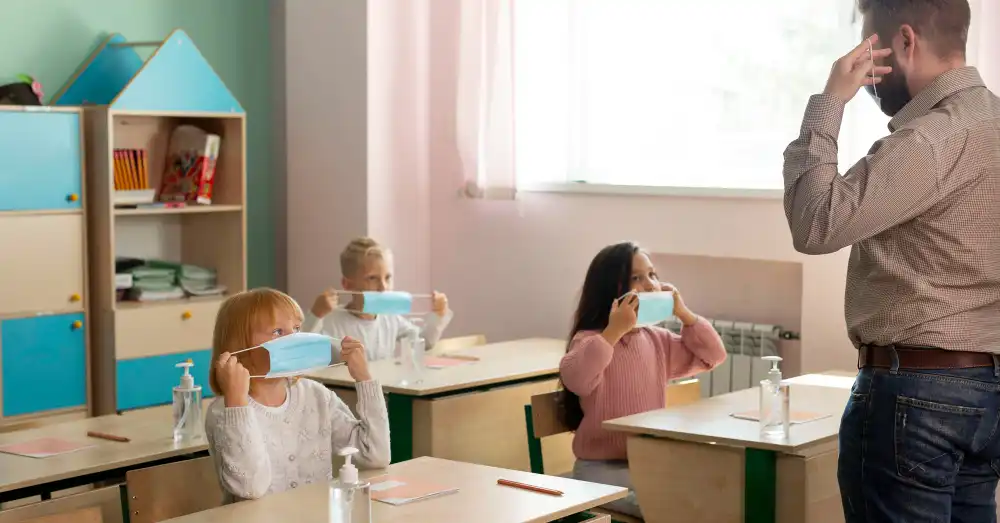
Most of the time, a contaminated school HVAC system does not announce itself as an HVAC problem. It shows up as something else entirely. Students who are frequently in the nurse's office with headaches or respiratory complaints. A teacher who has been dealing with a scratchy throat for most of the school year and attributes it to the job. Classrooms that always feel stuffy no matter what the thermostat says. Allergy symptoms that are noticeably worse during the school week and clear up over weekends and breaks. The pattern is what gives it away. When the symptoms follow the building schedule rather than a normal illness cycle, the building is usually the source.What a Professional School HVAC Cleaning Actually Covers
- Duct interior cleaning - removing accumulated dust, debris, and biological buildup from supply and return lines using commercial-grade equipment and source removal methods that pull contamination completely out of the system.
- Air handler and coil cleaning - the air handler is where the air actually gets conditioned before it enters the duct system. If the coil is fouled or the air handler interior is contaminated, cleaning the ducts alone does not fix the problem.
- Drain pan inspection and cleaning - standing water in drain pans is one of the primary sources of mold and biological growth inside school HVAC systems. It needs to be addressed directly.
- Vent covers, and grille cleaning - supply registers and return grilles accumulate their own layer of buildup and need to be cleaned as part of any thorough service.
- Airflow verification - after cleaning, confirming that air is distributing evenly throughout the building. Chronic stuffiness and uneven temperatures often resolve once the system is no longer fighting years of accumulated restriction.
At Mechanical Hygiene Services, our NADCA-certified team handles every step of this process using a proven approach that gets school systems into proper condition — before the problem shows up in your attendance records.
Don't Wait for a Complaint to Call a Professional
Mechanical Hygiene Services provides NADCA-certified HVAC cleaning and indoor air quality services for schools and educational facilities across Massachusetts, Rhode Island, and Connecticut, from Boston, Worcester, and Springfield to Providence, Newport, Hartford, and everywhere in between.
Our certified professionals know what to look for during an inspection and how to bring it into proper condition before the demands of a full school year hit.
If your school's HVAC system has not had a professional cleaning recently, now is the right time to get it on the schedule.
Contact Mechanical Hygiene Services today to book your school HVAC inspection and cleaning.