What NADCA Certification Actually Requires
What Standard Duct Cleaning Actually Cleans (This Part Surprises People)
Standard duct cleaning is not a regulated term. There's no licensing body behind it. No minimum training requirement. No baseline for what the job has to cover. Anybody with a van and a vacuum can legally call themselves a duct cleaning company and book jobs tomorrow.
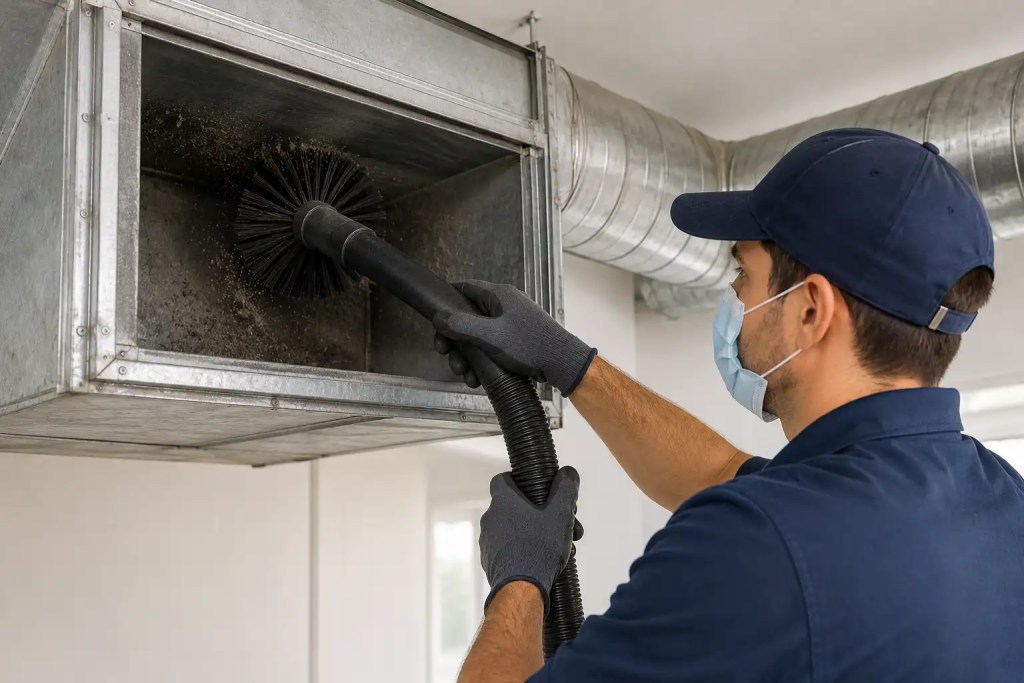
In practice, that means the technician cleans what's accessible. Visible duct runs. The registers. The air handler housing if it's easy to reach. Coils, some of the most contamination-prone and performance-critical components in any HVAC system, often go untouched. Drain pans. Return plenums. Anything that requires more time or specialized equipment tends to get skipped.
The job gets marked complete. The system looks the same from the outside. You have no idea what was left behind, because nobody told you it was supposed to be included.
That's not necessarily fraud. It's a job scoped to what the price allowed, and you didn't know how to ask for more.
Where This Starts Costing Real Money
Dirty coils force HVAC systems to work harder, increasing energy consumption and utility costs. Over time, this extra strain can shorten equipment life, leading to premature failures of compressors, motors, and other critical components.
Contamination also impacts indoor air quality, allowing dust, debris, and biological growth to continue circulating throughout the building. And if cleaning doesn't meet industry standards, it may not satisfy certain warranty or compliance requirements, potentially creating additional costs down the line.
The Honest Version of the Cost Comparison
NADCA-certified HVAC cleaning costs more upfront. That's true and worth saying plainly.
What's also worth saying plainly: the gap between the two quotes is rarely as large as the gap between a system cleaned properly and one that isn't. A 30 percent efficiency loss on a commercial HVAC system running year-round isn't a rounding error. Early equipment failure on a system with years of usable life left isn't a minor inconvenience.
The cheaper quote isn't saving you money. It's moving the money to a different column, one that shows up later, costs more, and comes with a lot less warning.
Mechanical Hygiene Services has been NADCA-certified for over two decades, working in commercial buildings, schools, daycares, residential properties, and institutional facilities across Massachusetts, Rhode Island, and Connecticut. Every job is scoped to the ACR standard and documented on completion, no exceptions.
If you're comparing bids right now and want to know exactly what a NADCA-compliant cleaning covers for your specific building, we're glad to walk you through it. No sales pitch. Just a straight answer.